

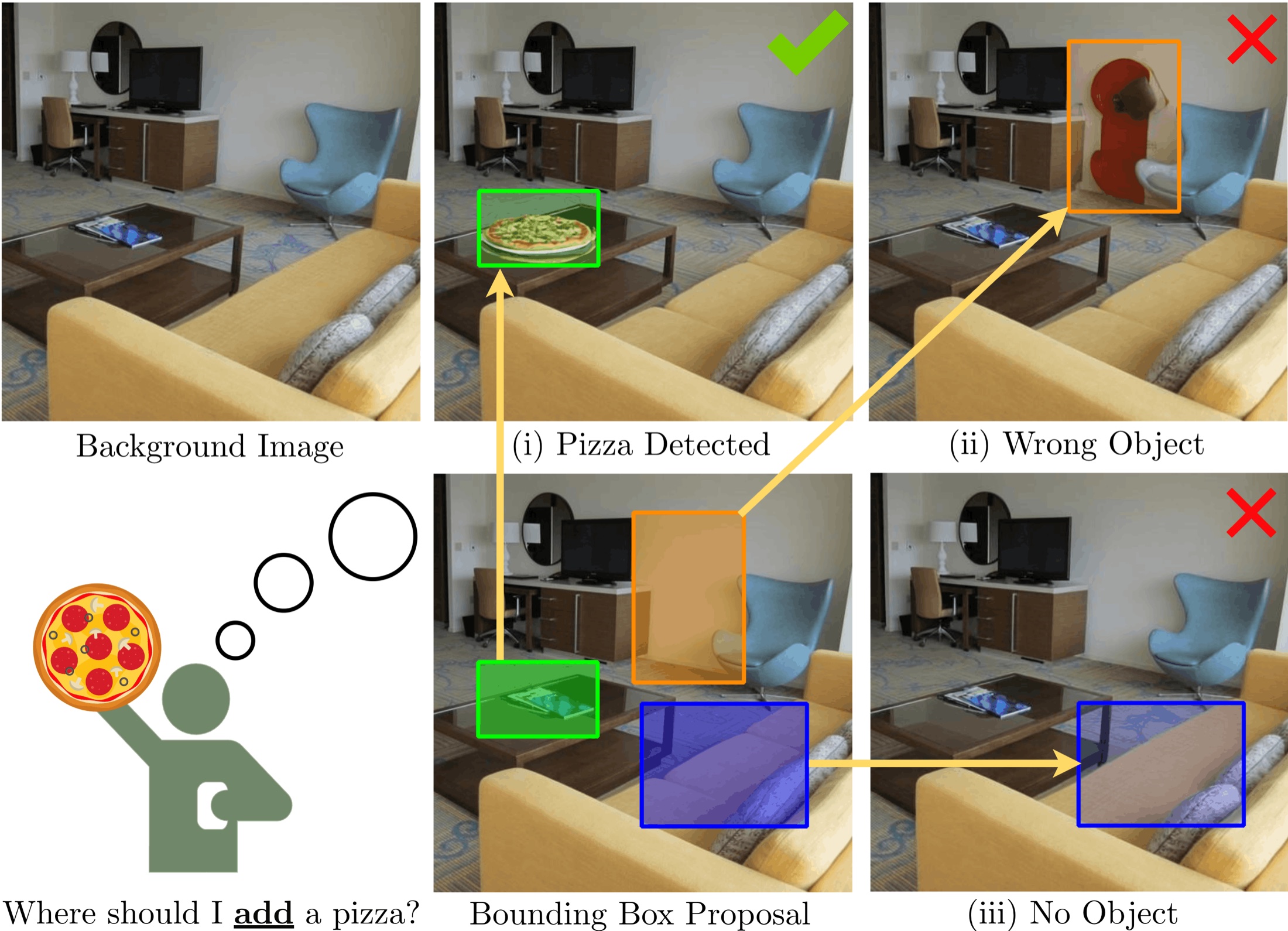
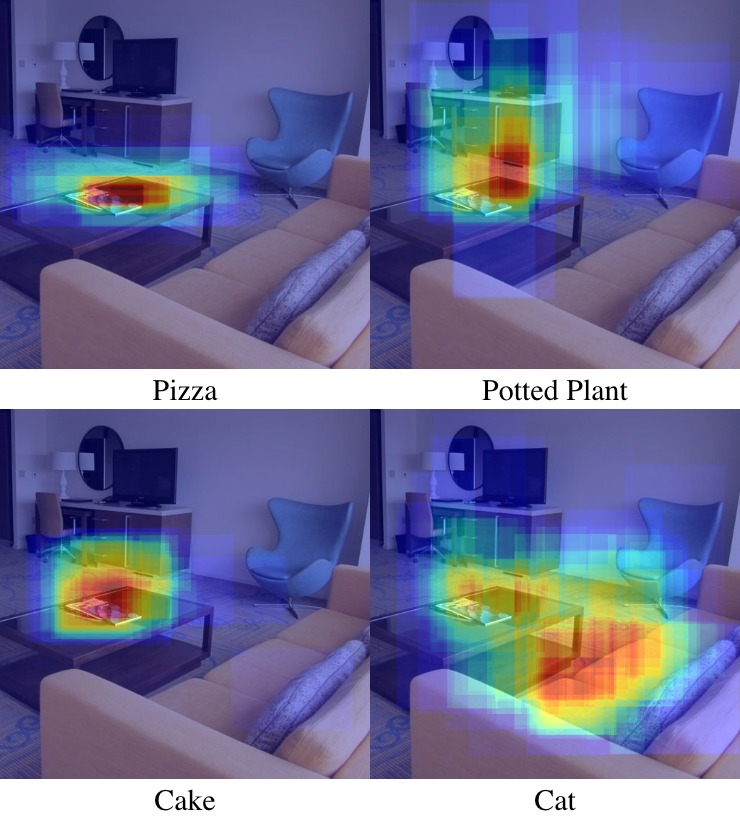
After one denoising step, the conditional–unconditional noise gap flags failed insertions (81% recall). Skipping them gives a 2.4× speedup without degrading the prior.
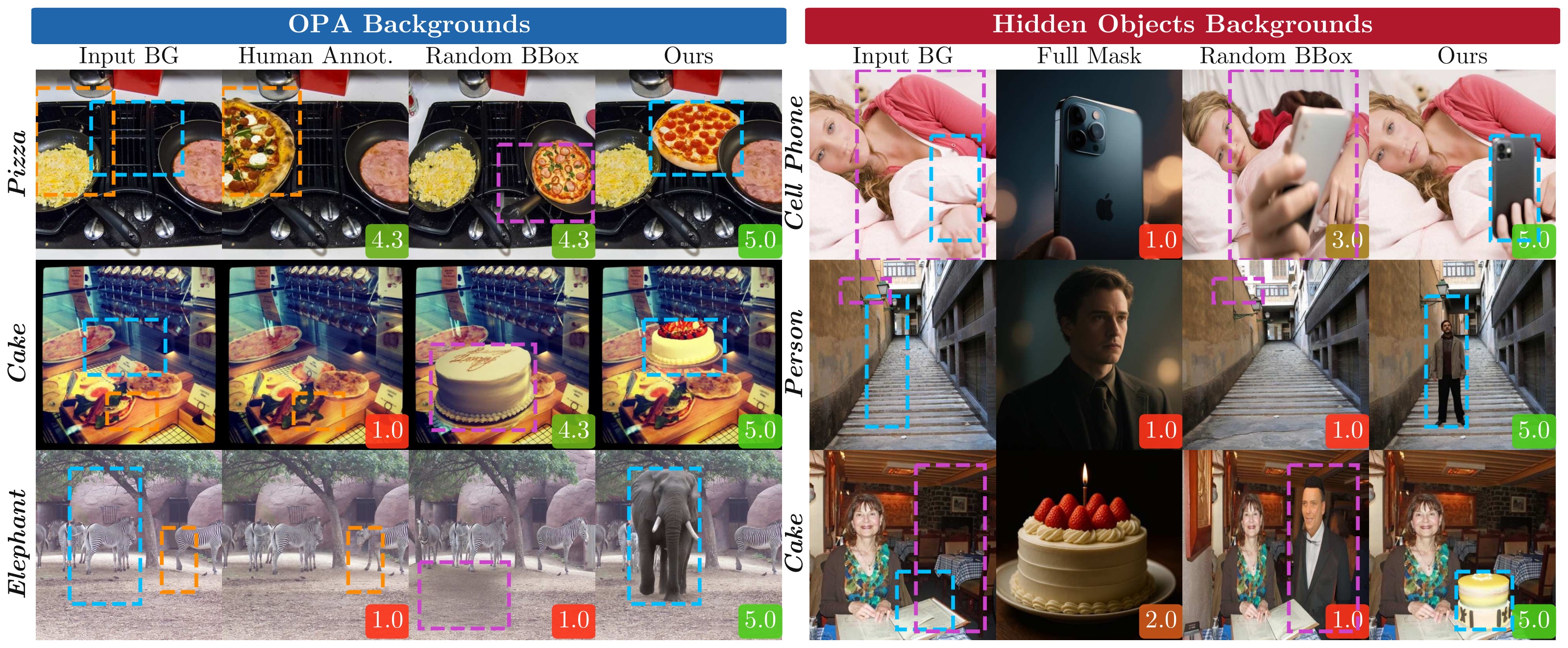
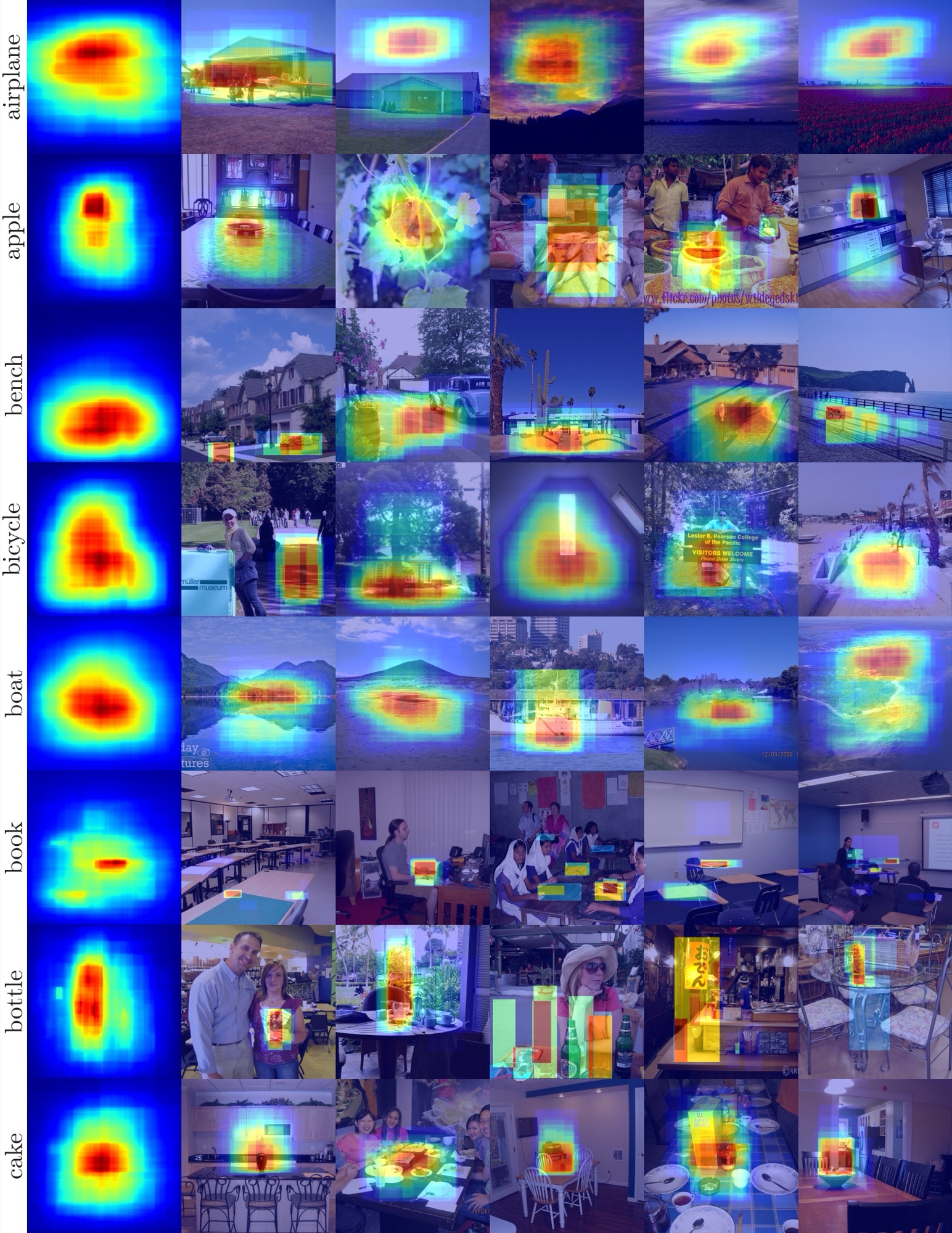
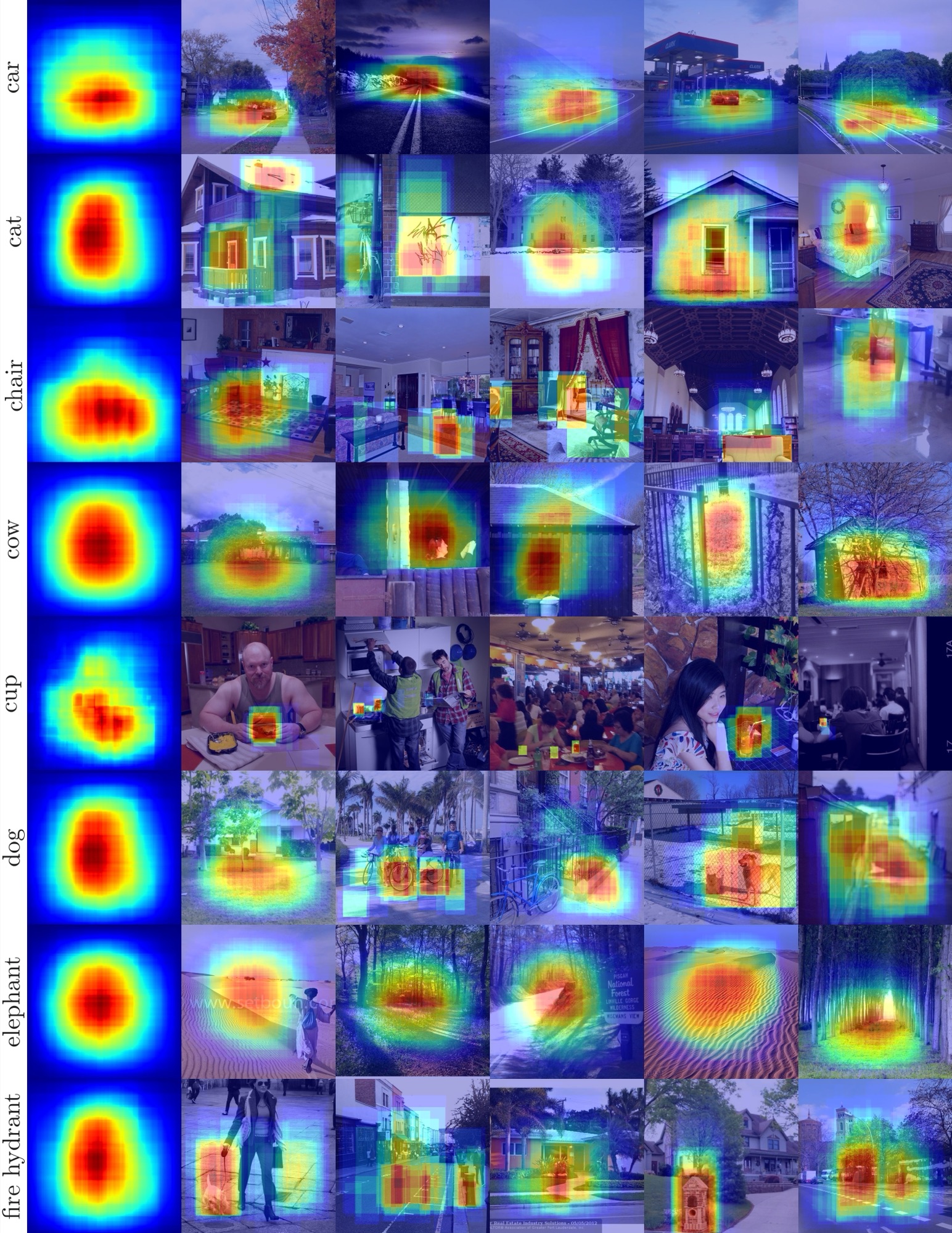
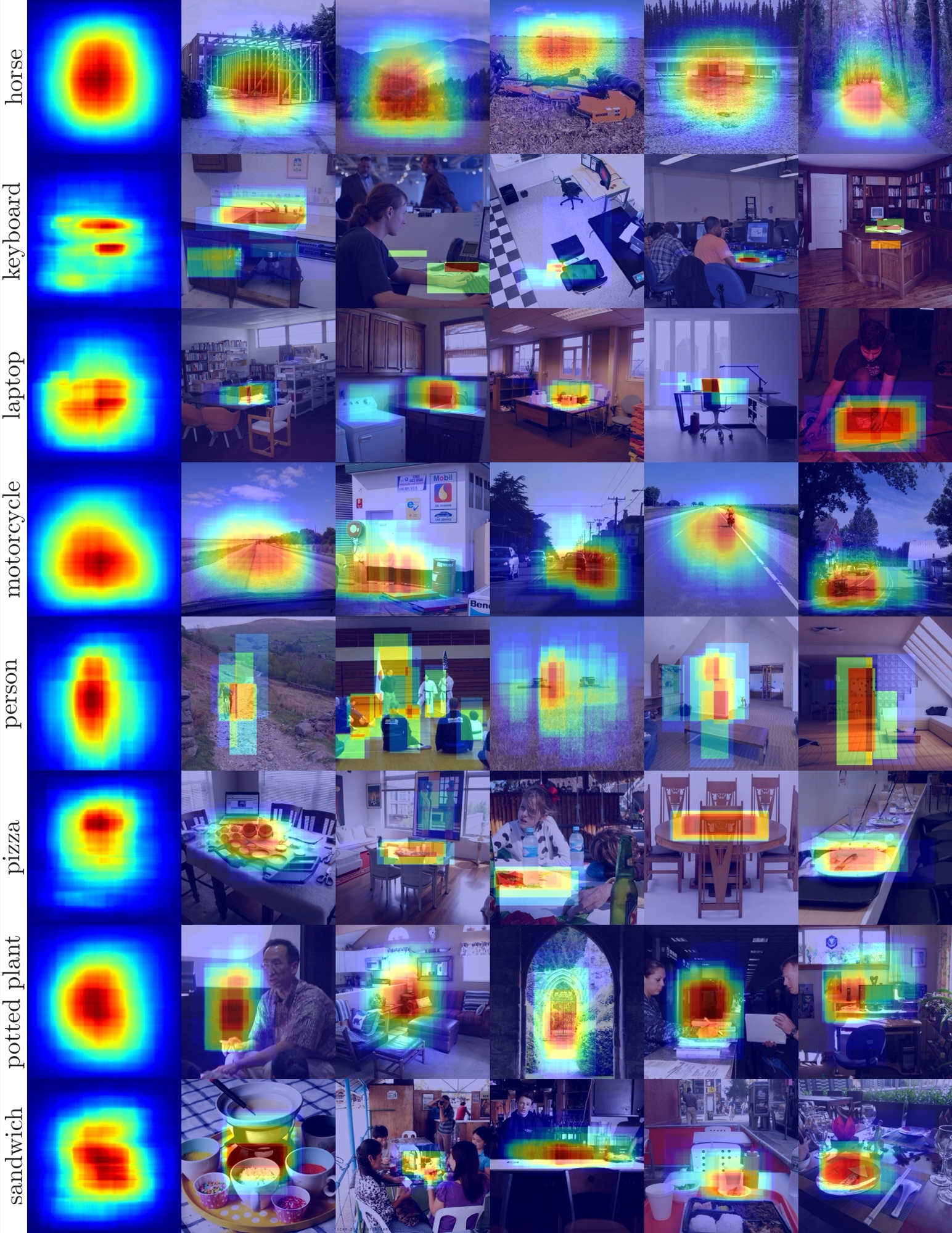
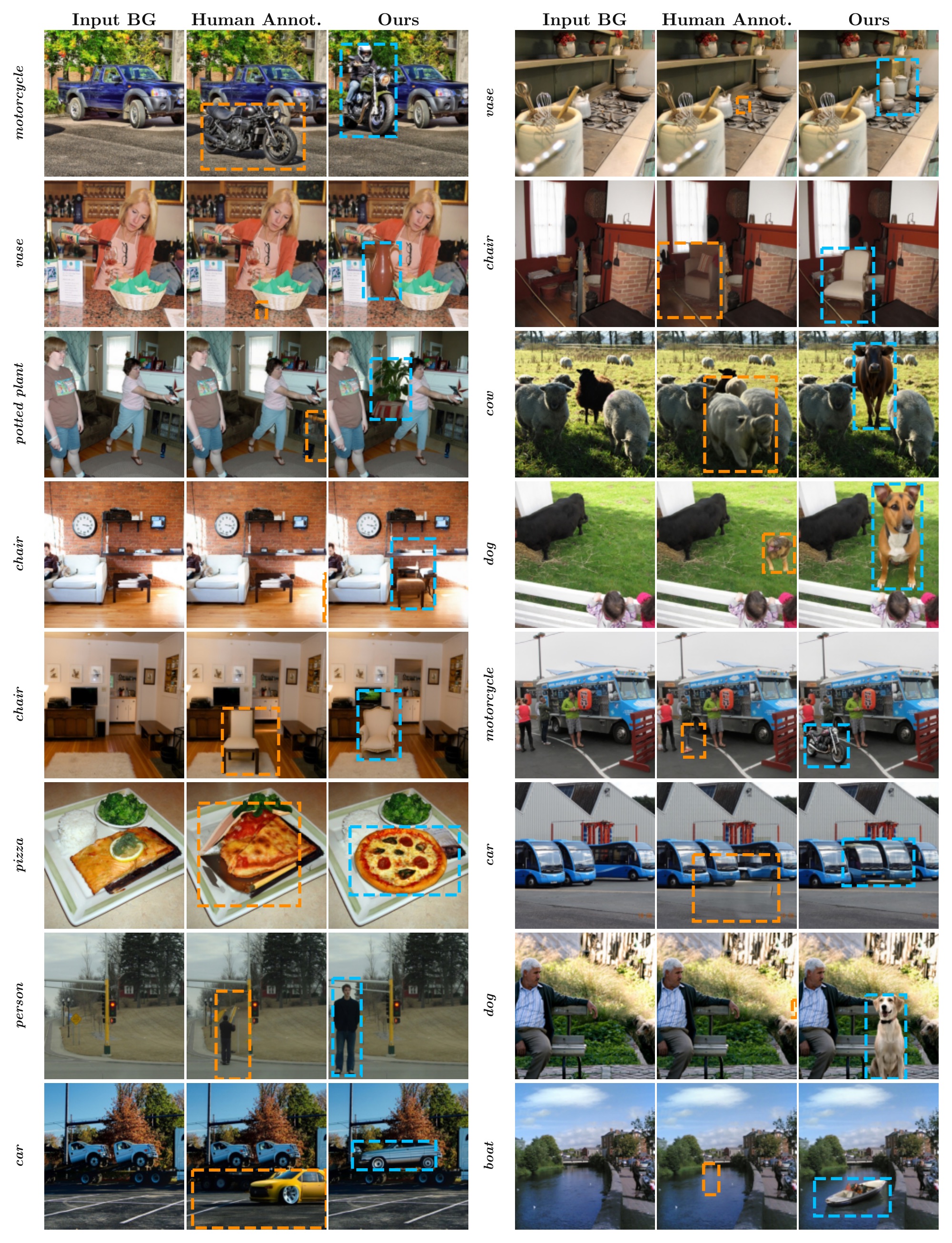
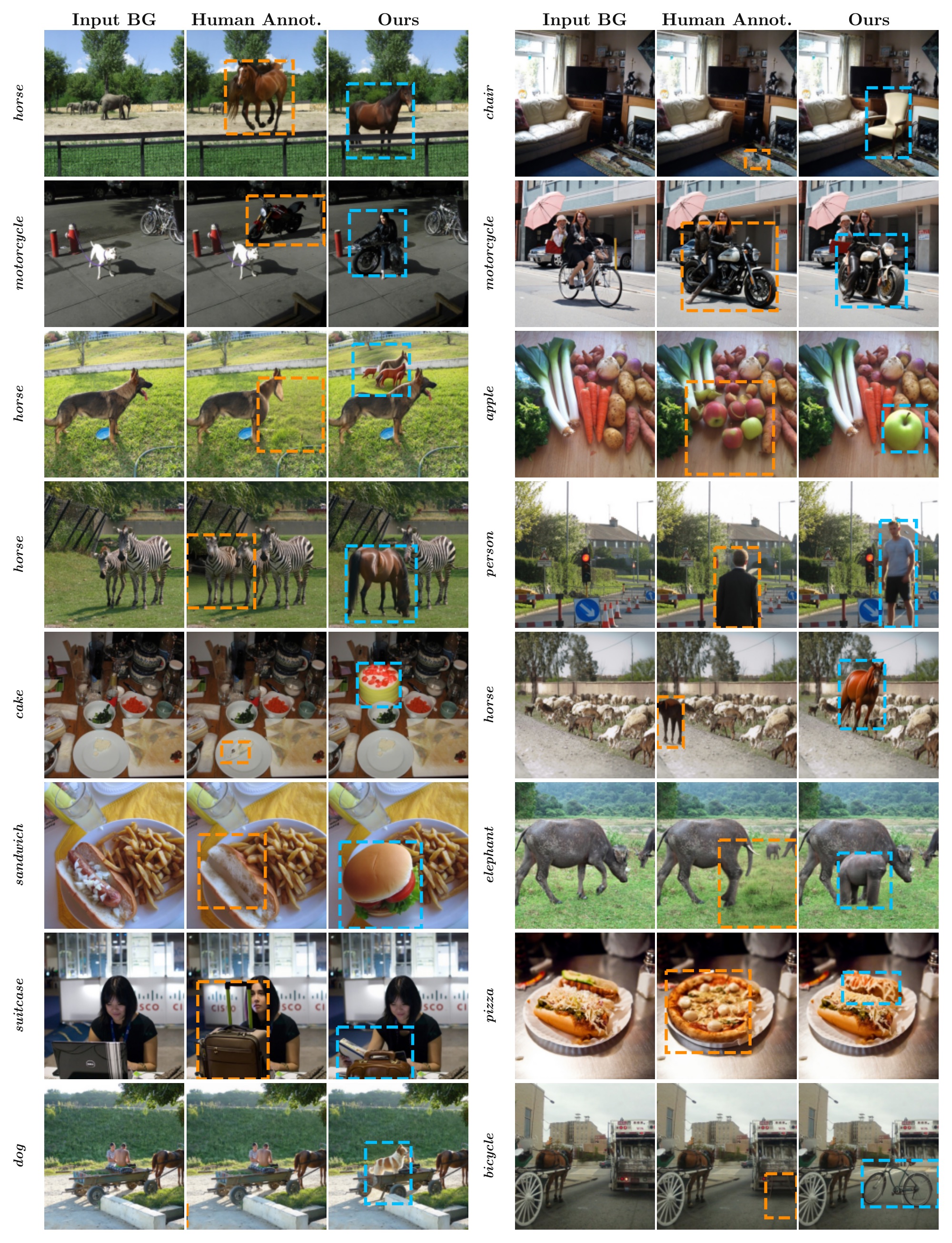
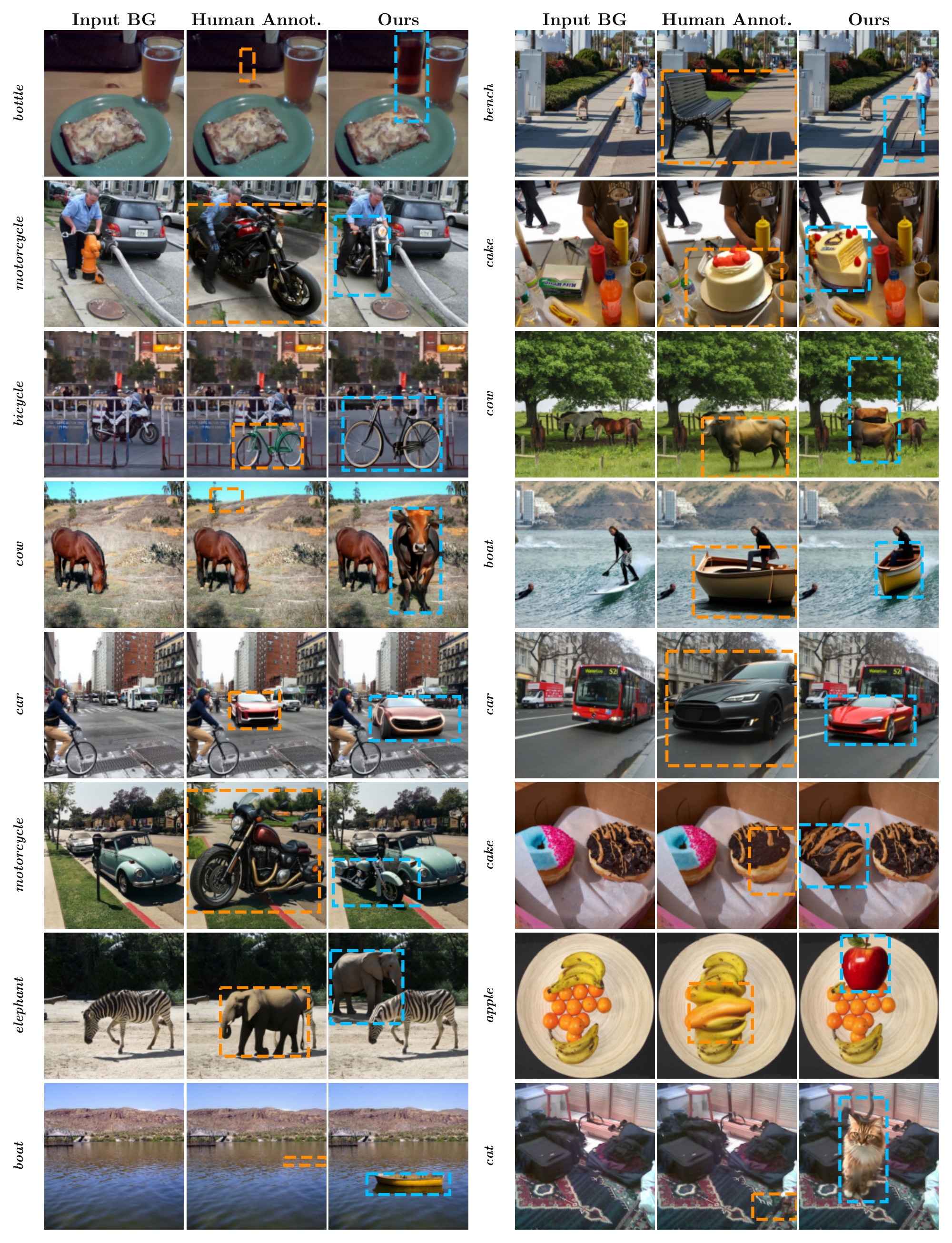
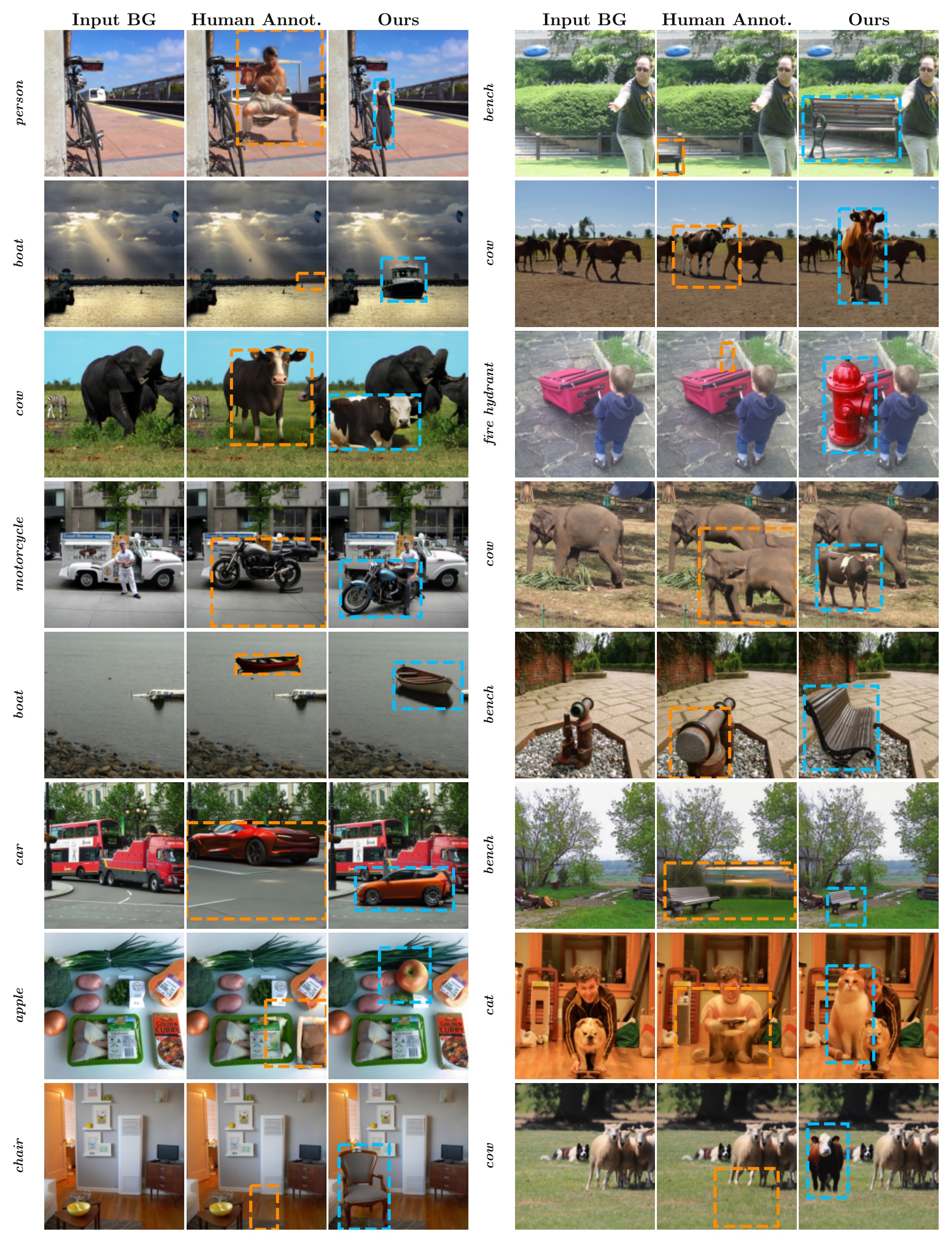
We learn explicit, class-conditioned spatial priors for object placement in natural scenes by distilling placement knowledge from text-conditioned diffusion models. Prior methods rely on sparse manual annotations or on inpainting object-removal pipelines, whose artifacts promote shortcut learning. To address these limitations, we propose a scalable pipeline that evaluates dense candidate placements by inserting objects into clean backgrounds. This produces HiddenObjects, a dataset of 27M bounding-box annotations (2M positives) across 27k diverse scenes and object categories. Human evaluators prefer our image editing composites over those guided by sparse annotations in 65.6% of comparisons. We distill the priors into a lightweight placement model that achieves the best accuracy among dedicated baselines and zero-shot vision-language models.
We construct HiddenObjects by pairing 27k background images from 126 scene categories of Places365 with 50 COCO foreground categories across 10 macro-classes (food, furniture, animal, vehicle, …). Each scene–category pair is annotated with 1,004 ranked bounding box proposals, yielding 27M placement annotations in total.
Hover over any image to reveal its placement annotations. Green = accepted.
| Dataset | # Boxes | + / inst | − / inst | Real Img | Dense | Scalable | Clean BG |
|---|---|---|---|---|---|---|---|
| DreamEditBench | 220 | 1 | 0 | ✓ | ✗ | ✗ | ✓ |
| MureCom | 640 | 1 | 0 | ✓ | ✗ | ✗ | ✓ |
| OPA | 0.07M | 1.9 | 3.8 | ✓ | ✗ | ✗ | ✓ |
| OPA-ext | 0.15M | 2.2 | 4.3 | ✓ | ✗ | ✗ | ✓ |
| PIPE | 0.89M | 1 | 0 | ✗ | ✗ | ✓ | ✗ |
| SAM-FB | 3M | 1 | 0 | ✗ | ✗ | ✓ | ✗ |
| HiddenObjects | 27M | 77.7 | 926.3 | ✓ | ✓ | ✓ | ✓ |

① Inpainter
Qwen-Image + ControlNet synthesises class-consistent object insertions at each bounding box in a sliding-window grid. ControlNet conditioning enforces scene geometry and refuses physically impossible placements.
② Verifier
Grounded-SAM-2 detects whether the target object was successfully inpainted in the proposed region. Low-confidence detections, wrong categories, and object replacements are discarded.
③ Ranker
ImageReward assigns a human-preference score to each verified insertion. The ranked scores define the final spatial prior distribution over all valid locations.

Example spatial prior creation. Our pipeline performs an exhaustive sliding-window search on a kitchen scene for pizza insertions.
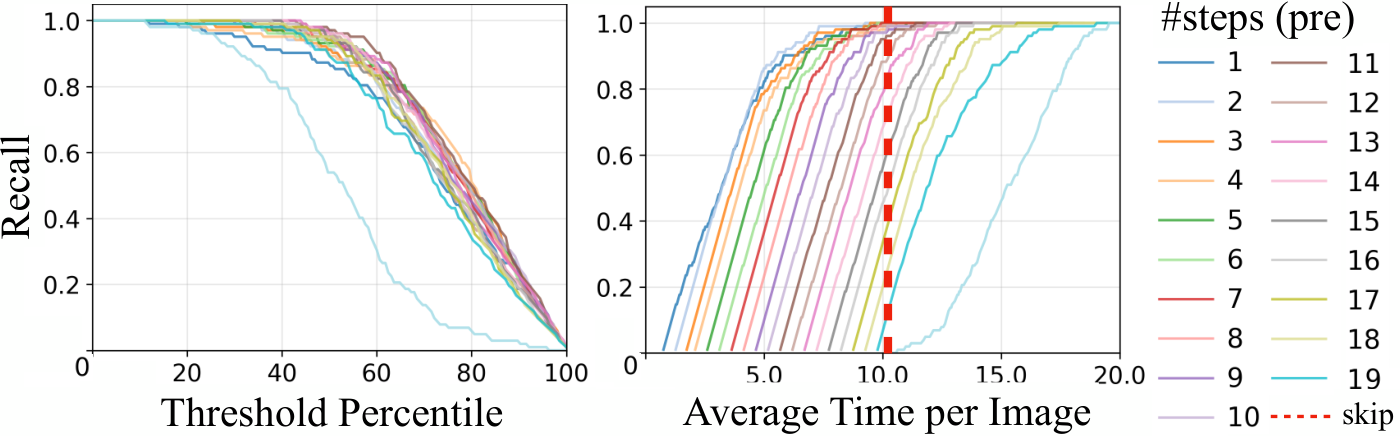
After one denoising step, the conditional–unconditional noise gap flags failed insertions (81% recall). Skipping them gives a 2.4× speedup without degrading the prior.

We inpaint objects at each method's boxes and score the edits with ImgEdit-Judge (1–5).
A lightweight transformer predicts ranked boxes from an image and a class: 230,000× faster and 300× less memory than the full pipeline.

Randomly sampled spatial priors and image-editing results from the appendix. Swipe, use the arrows, or press ← / →.
@misc{schouten2026hiddenobjects,
      title={HiddenObjects: Scalable Diffusion-Distilled Spatial Priors for Object Placement},
      author={Marco Schouten and Ioannis Siglidis and Serge Belongie and Dim P. Papadopoulos},
      year={2026},
      eprint={2604.10675},
      archivePrefix={arXiv},
      primaryClass={cs.CV},
      url={https://arxiv.org/abs/2604.10675},
}